 Image 1 of 3
 Image 2 of 3
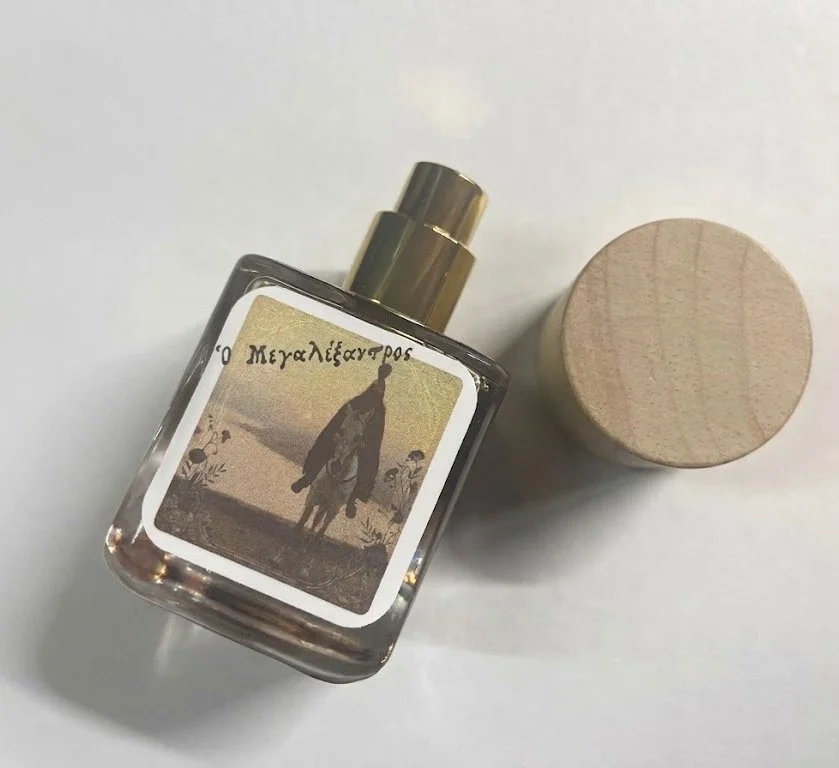 Image 3 of 3
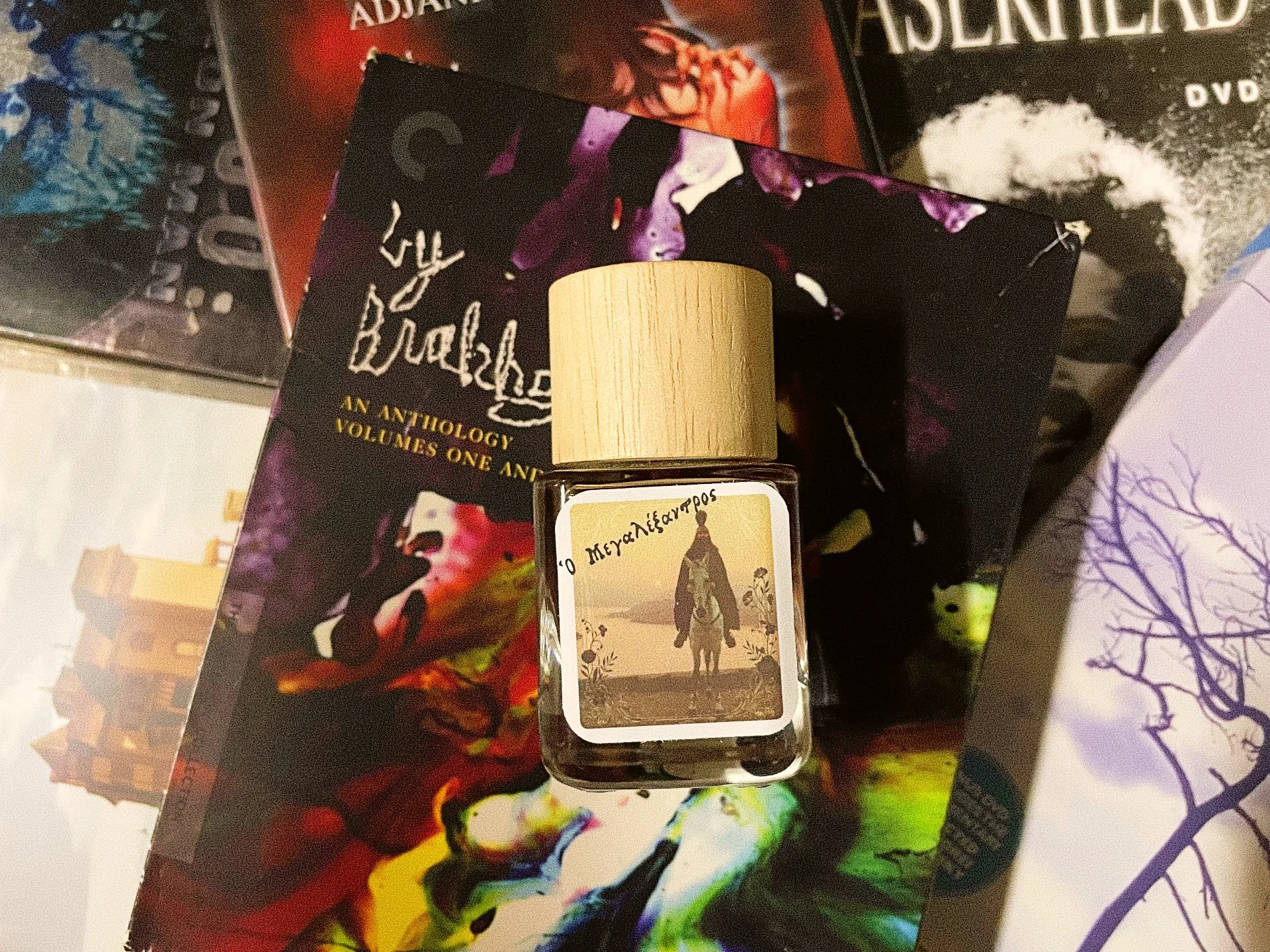
Parfum Extrait
Apricot, Bergamot, Black Sacra Frankincense, Black Walnut, Blue Cypress, Boswellia Papyrifera, Chamomile, Chrysanthemum, Clove Bud, Cumin, Gentiana, Golden Ambergris, Hay, Lavender Absolute, Mastic, Mysore Sandalwood, Oakmoss Absolute, Opoponax, Orange Blossom, Patchouli, Peach, Rue, Sweet Basil, Tonka, Vetiver, White Ambergris, White Pepper, Ylang Ylang Absolute, ZedoaryMegalexandros draws from Angelopoulos' 1980 film, where a mountain village stands in for a country that in the director's eyes has no history of its own, only wounds that keep reopening. The film's long, undivided takes hold a man entering a room, waiting, doing nothing that montage would normally compress. That waiting is itself content. This composition works on the same principle: each material is given room to sit before another arrives, and the space between accords carries as much weight as the accords themselves.
The opening holds bergamot, apricot, peach, and orange blossom under a sky Angelopoulos preferred cloudy over bright. Chamomile and chrysanthemum fade the fruit rather than sweeten it. Sweet basil, rue, gentiana, and zedoary run underneath as the herbal bitterness of plants that have colonized a ruined wall, indifferent to whoever built it.
Black sacra frankincense, Boswellia papyrifera, mastic, and opoponax gather next, resin thickening into something closer to smoke than scent, recalling the film's own drift from the historical toward the sacred: a river baptism, a feast staged like the Last Supper with a bandit seated where Christ would sit, still simultaneously full of a mind given it by the Greek Orthodox Church. Blue cypress keeps the incense from turning heavy. Lavender absolute and ylang ylang open a floral note that stays restrained, the way Alexander himself speaks exactly once in the whole film, a single sentence delivered to an empty room to justify a killing: it had to be done. Clove bud, cumin, and white pepper sit at the edges, present without asking for attention.
The drydown is where the film's ending lives (after three and a half hours nonetheless.) Mysore sandalwood, oakmoss absolute, patchouli, vetiver, hay, and black walnut settle like the marble bust left standing after the village empties, blood running down stone that had been worshipped as a god an hour before. Golden and white ambergris widen the base without warming it. Tonka closes the composition the way the film closes: a boy rides out of the ruins toward Athens on a white horse, carrying a myth that has just failed and still somehow has somewhere left to go.
Angelopoulos said the islands held no history for him because nothing there had been wounded. Megalexandros is built from that same instinct. It favors materials that have already been through something: dried grass rather than cut flowers, aged resin rather than citrus still bright with morning light. What remains on skin by the end is less a scent than a residue of what the land was made to carry.
Parfum Extrait
Apricot, Bergamot, Black Sacra Frankincense, Black Walnut, Blue Cypress, Boswellia Papyrifera, Chamomile, Chrysanthemum, Clove Bud, Cumin, Gentiana, Golden Ambergris, Hay, Lavender Absolute, Mastic, Mysore Sandalwood, Oakmoss Absolute, Opoponax, Orange Blossom, Patchouli, Peach, Rue, Sweet Basil, Tonka, Vetiver, White Ambergris, White Pepper, Ylang Ylang Absolute, ZedoaryMegalexandros draws from Angelopoulos' 1980 film, where a mountain village stands in for a country that in the director's eyes has no history of its own, only wounds that keep reopening. The film's long, undivided takes hold a man entering a room, waiting, doing nothing that montage would normally compress. That waiting is itself content. This composition works on the same principle: each material is given room to sit before another arrives, and the space between accords carries as much weight as the accords themselves.
The opening holds bergamot, apricot, peach, and orange blossom under a sky Angelopoulos preferred cloudy over bright. Chamomile and chrysanthemum fade the fruit rather than sweeten it. Sweet basil, rue, gentiana, and zedoary run underneath as the herbal bitterness of plants that have colonized a ruined wall, indifferent to whoever built it.
Black sacra frankincense, Boswellia papyrifera, mastic, and opoponax gather next, resin thickening into something closer to smoke than scent, recalling the film's own drift from the historical toward the sacred: a river baptism, a feast staged like the Last Supper with a bandit seated where Christ would sit, still simultaneously full of a mind given it by the Greek Orthodox Church. Blue cypress keeps the incense from turning heavy. Lavender absolute and ylang ylang open a floral note that stays restrained, the way Alexander himself speaks exactly once in the whole film, a single sentence delivered to an empty room to justify a killing: it had to be done. Clove bud, cumin, and white pepper sit at the edges, present without asking for attention.
The drydown is where the film's ending lives (after three and a half hours nonetheless.) Mysore sandalwood, oakmoss absolute, patchouli, vetiver, hay, and black walnut settle like the marble bust left standing after the village empties, blood running down stone that had been worshipped as a god an hour before. Golden and white ambergris widen the base without warming it. Tonka closes the composition the way the film closes: a boy rides out of the ruins toward Athens on a white horse, carrying a myth that has just failed and still somehow has somewhere left to go.
Angelopoulos said the islands held no history for him because nothing there had been wounded. Megalexandros is built from that same instinct. It favors materials that have already been through something: dried grass rather than cut flowers, aged resin rather than citrus still bright with morning light. What remains on skin by the end is less a scent than a residue of what the land was made to carry.